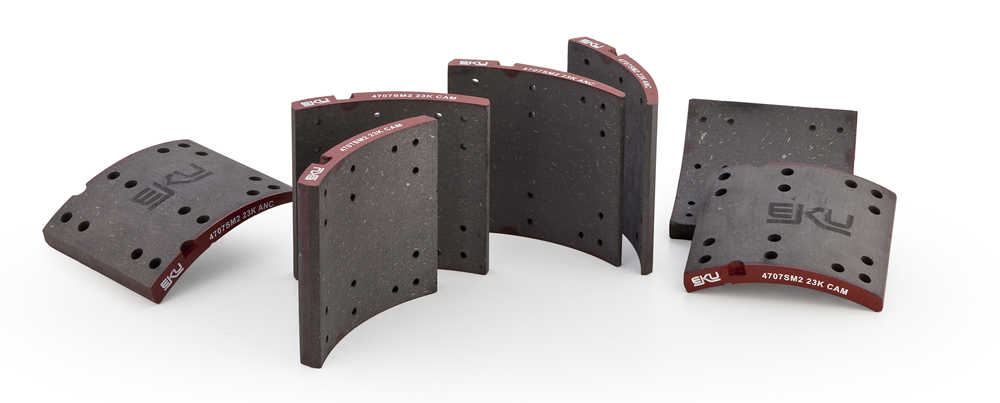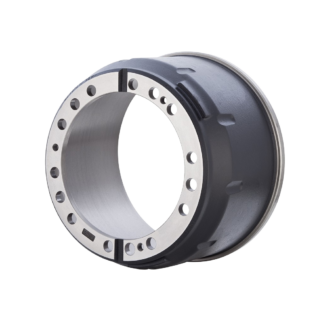
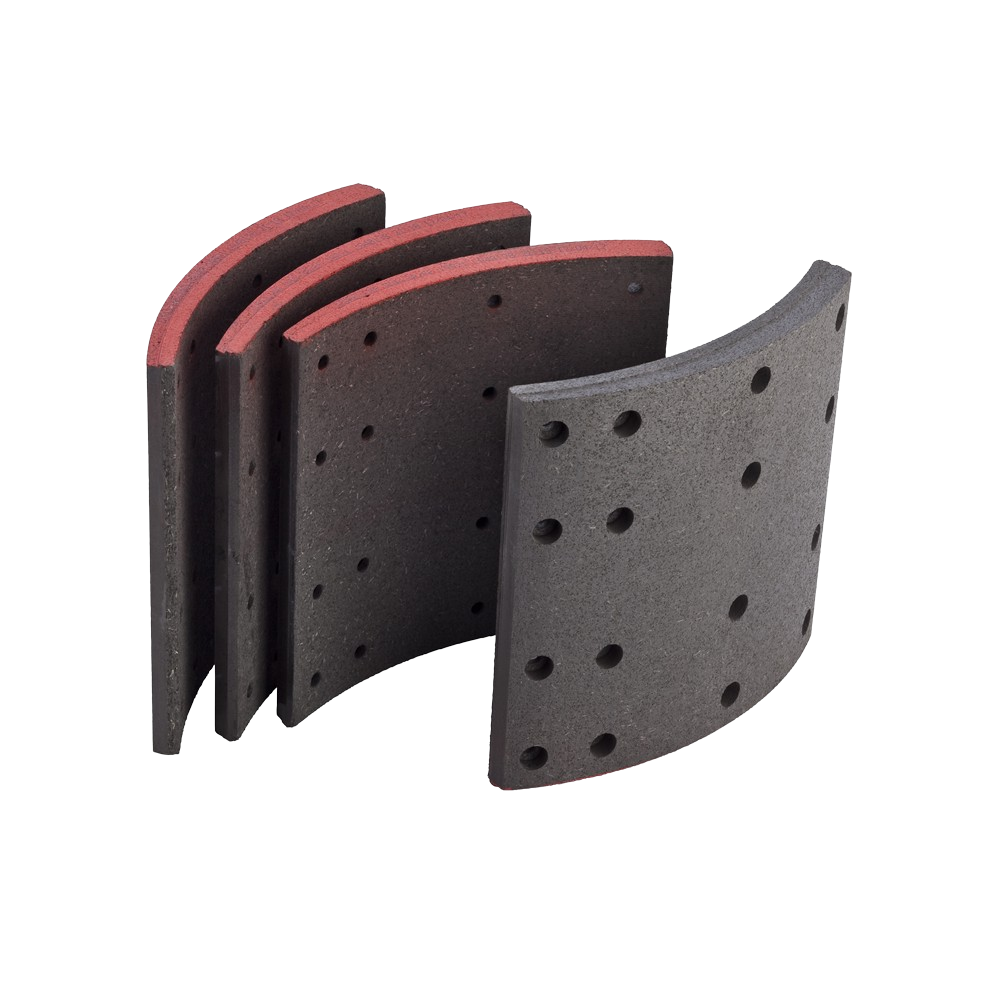
 Drum linings are friction brake elements that play a key role in vehicle braking systems. Selecting the lining material in accordance with certain standards and ensuring production conditions is of great importance to meet important requirements such as maximum friction coefficient, a balanced friction coefficient, minimum wear, stability against vibrations and low production cost. These pads are subjected to certain tests to assess their suitability for service conditions.
Drum Lining Structure
The structure of drum linings is shaped with special attention to a range of factors, from thermal properties to mechanical properties, corrosion resistance to density, friction to wear characteristics. Its main components include a high coefficient of friction, a stable coefficient of friction, minimum wear and economical production costs. These are critical factors that determine the braking performance of drum linings.
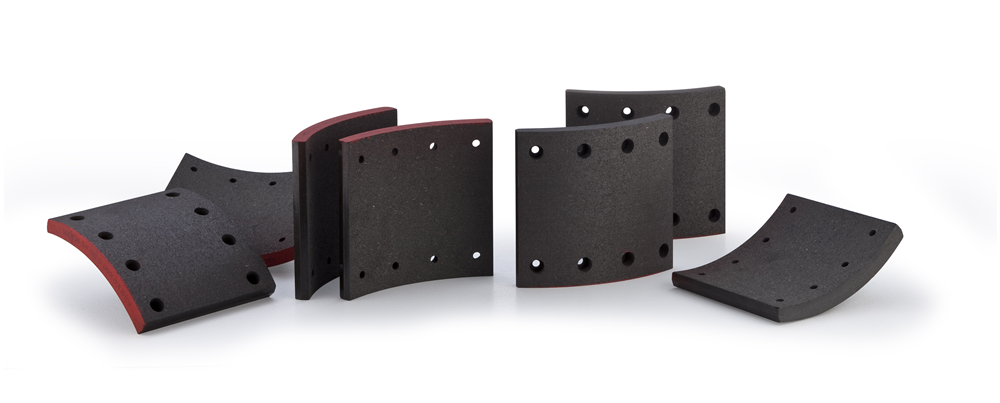
What are the Main Components of Drum Pads?
Drum pads are components that play an important role in braking systems. The main components of these pads are as follows:
Lining Material: The lining material, which is the basic building block of drum linings, is selected in accordance with certain standards and designed with production conditions in mind. The material must have critical properties such as friction characteristics, durability and resistance to heat.
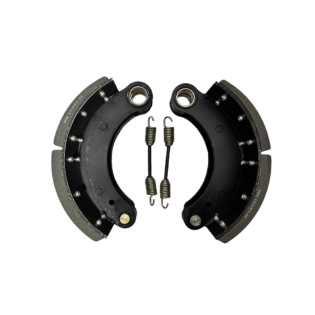
Metal Frame or Carrier: The lining material is usually placed on a metal frame or carrier. This frame increases the durability of the pad and ensures its stability.
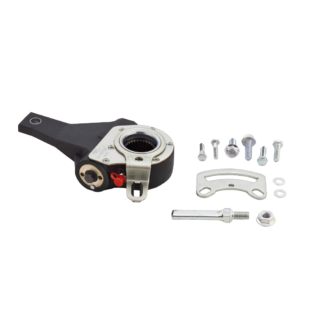
Brake Adjustment Mechanism: Drum linings have a brake adjustment mechanism for proper operation. This mechanism can be adjusted to ensure proper contact of the pads with the disc or drum.
Drum Pad Springs: Contain springs that allow the pads to be released when separated from the disc or drum. These springs help the pads move away from the disc or drum when the brake is released.
These components enable the drum linings to work effectively and contribute to a safe braking performance in braking systems.